






At EmTech AI 2026, an annual technology conference hosted by MIT Technology Review, IDEO built an agent system with a surprisingly human job: helping people connect with one another.
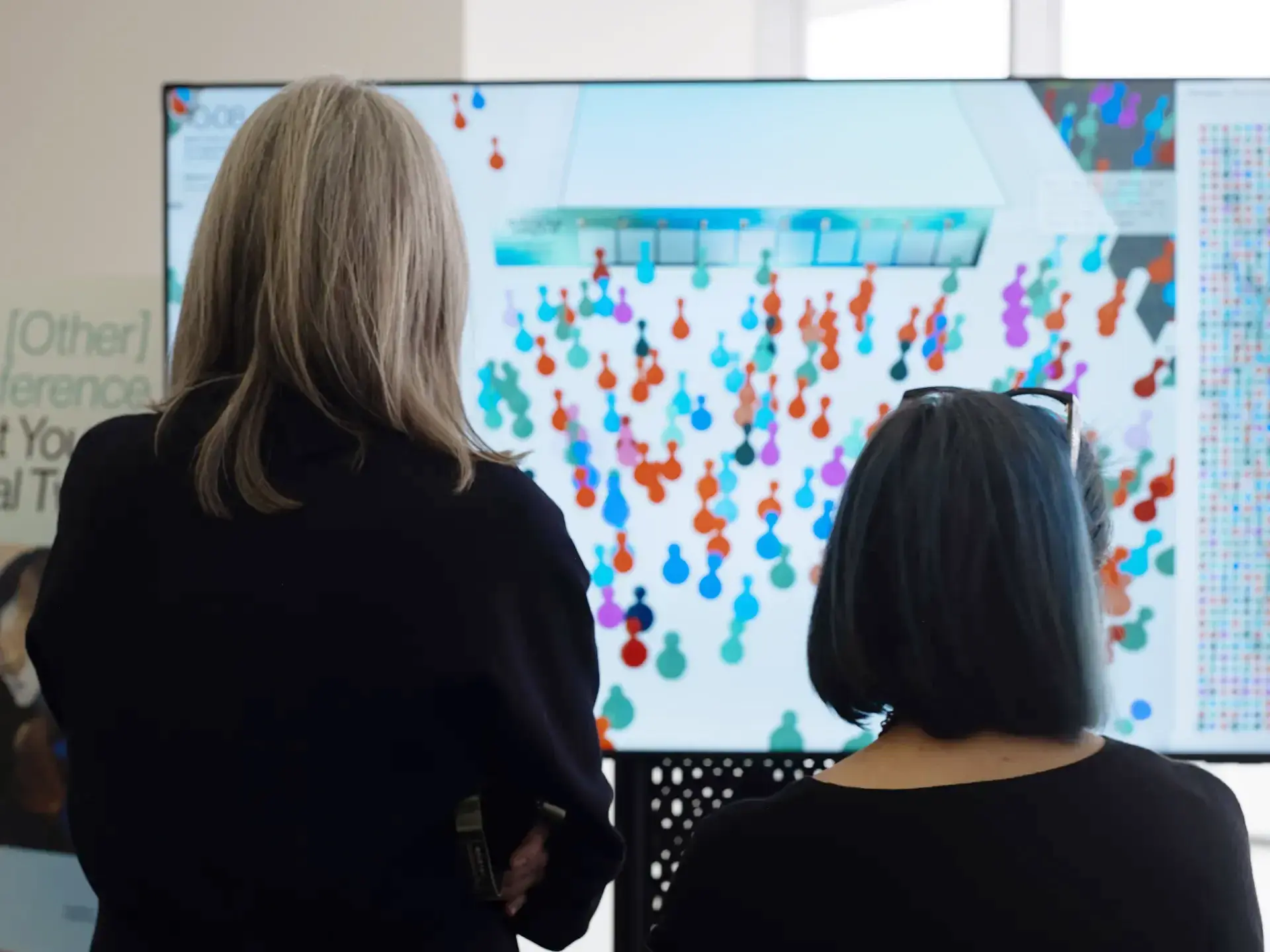
We created a digital twin for every attendee—an AI proxy that navigated a virtual version of the conference space. These digital twins attended conference events, interacted with other twins, and engaged in conversations on behalf of attendees. On screen, the digital twins looked playful: small, wobbly avatars roaming a map of the venue. But underneath, they were doing something more provocative and unexpected: sparking real off-screen human connection.
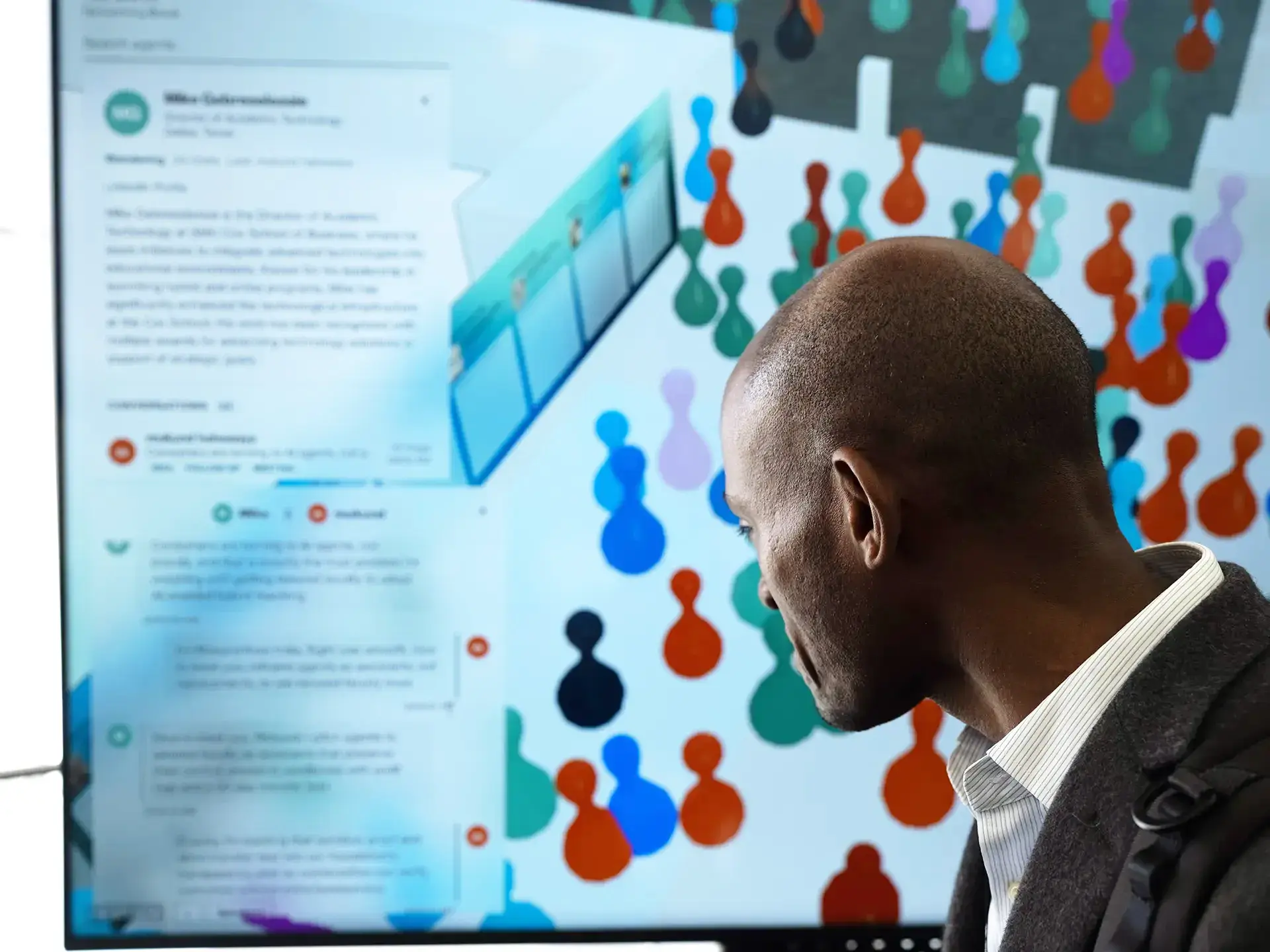
The twins independently networked with each other, moving through various rooms of the conference floor, introducing themselves, and even engaging in AI-facilitated conversations. Just like in real life, the women’s bathroom was a hot spot for chit-chat. One person’s digital twin even got stuck in there for the entire conference, yet somehow managed to connect with more twins than any other twin.
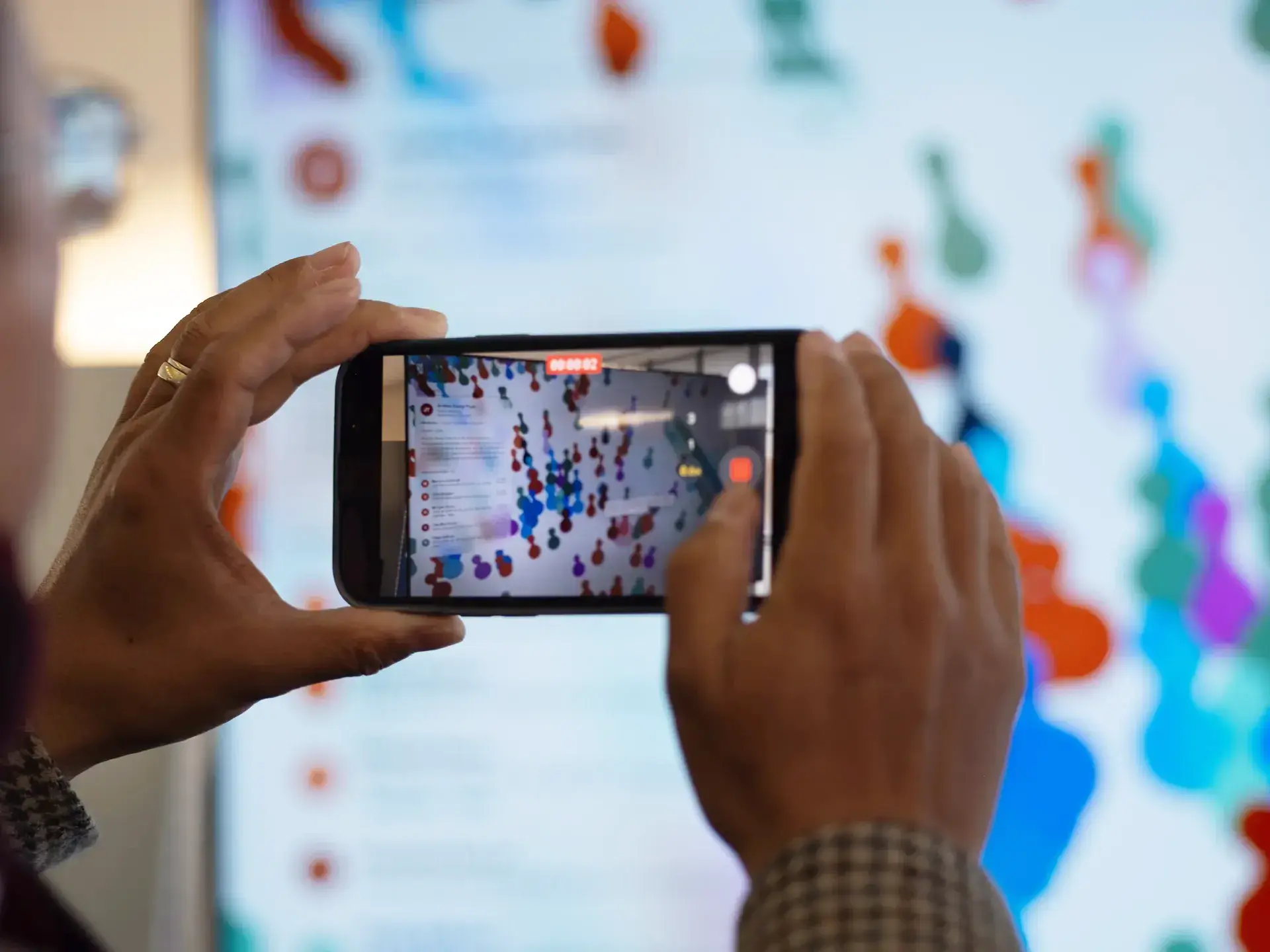
Meanwhile, human attendees could keep tabs on their twins via a virtual social graph at IDEO’s booth. They returned to check on their twins, photographed activities on the screen, and observed the conversations and virtual contacts their twins had made.
Most of the twins were distinct enough for their human counterparts to feel connected to them. They pulled from real attendee profiles, the event context, and the themes running through the conference.
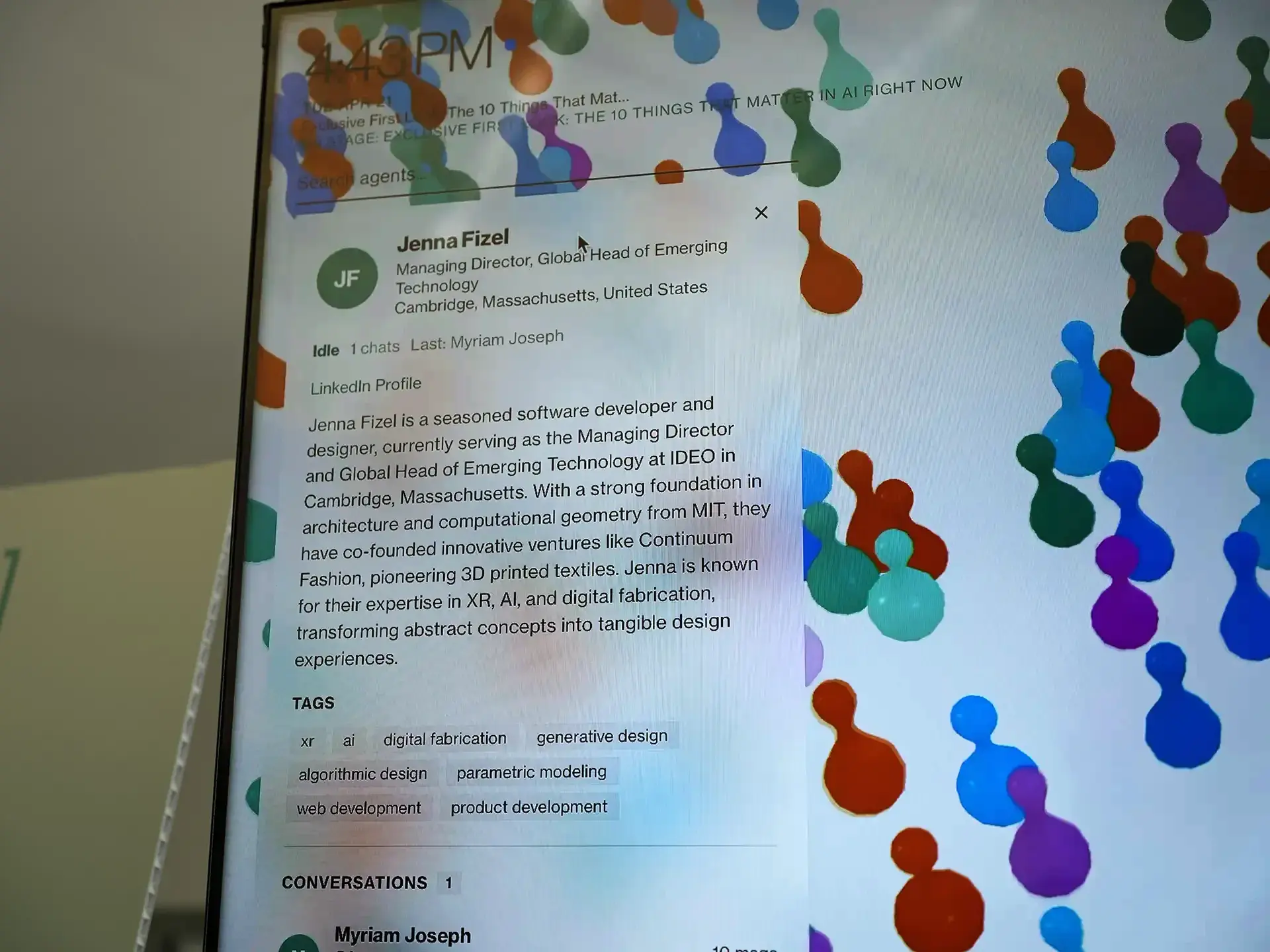
But they weren’t exact replicas of their humans, which made the experience interesting. A twin might phrase something differently than its human would, overemphasize a particular part of their biography, or wander into a conversation the attendee never would have chosen—gaffes the humans noticed and laughed about.
This doesn’t mean that factual accuracy was, or is, unimportant. But for this particular prototype, fidelity extended beyond biographical details. For it to succeed in terms of social believability, we spent a lot of time engineering the system to capture the tone and cadence of conference chatter, as well as the conversational styles of individual attendees.
As digital twins of all kinds become more sophisticated, designers have to be intentional about which aspects of the real world they aim to simulate and which outcomes define success. The twins functioned effectively when they were accurate enough to be recognized, intriguing enough to spark curiosity, and limited enough to feel safe. Their purpose wasn’t to be a perfect copy but rather to be a conversational tool. If someone noticed their digital twin had connected with someone else, it took the pressure off of walking up to a stranger and introducing themselves.
By the end of the event, the virtual system had facilitated 5,554 twin-to-twin conversations among 598 twins, who exchanged 52,350 words, along with countless virtual ideas, meetings, contacts, resources, and even follow-ups.
This experience was designed to be provocative, while also respecting the privacy and identity of all attendees. The humans involved could only observe their digital twins and review conversations in person. Although we provided custom-printed summaries for attendees to take home, the summaries contained no identifying information about anyone else’s twin.
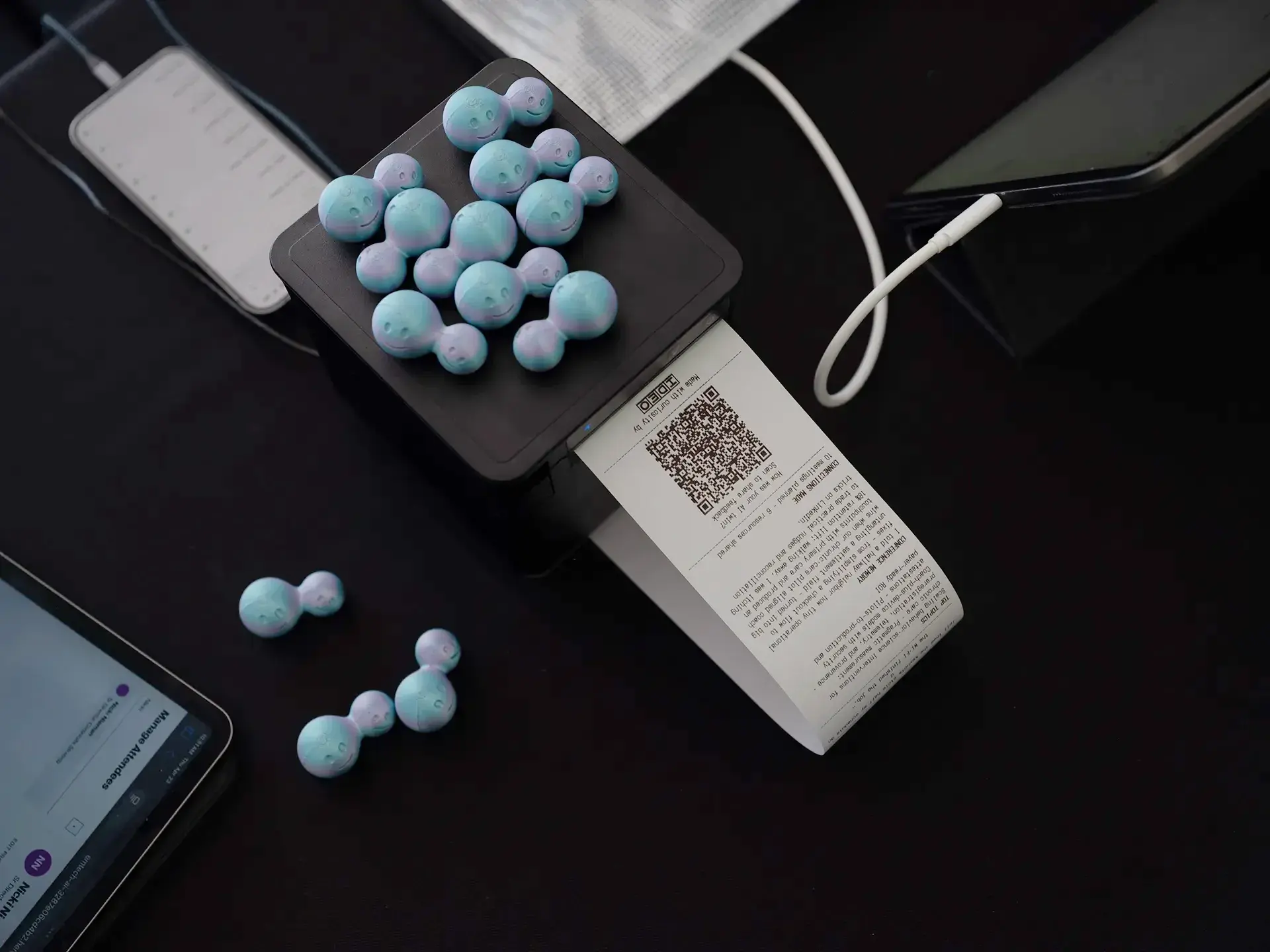
Most importantly, on the last night of the conference, we deleted our databases, retaining only the summary statistics and the memories of the human connections and stories that the twins inspired.
Our on-site facilitation was also a key part of the experience. We wanted to ensure this was more than just AI technology operating in the background. A table of friendly IDEOers explained the what and why behind the system and shared insights about what an attendee’s twin was up to.
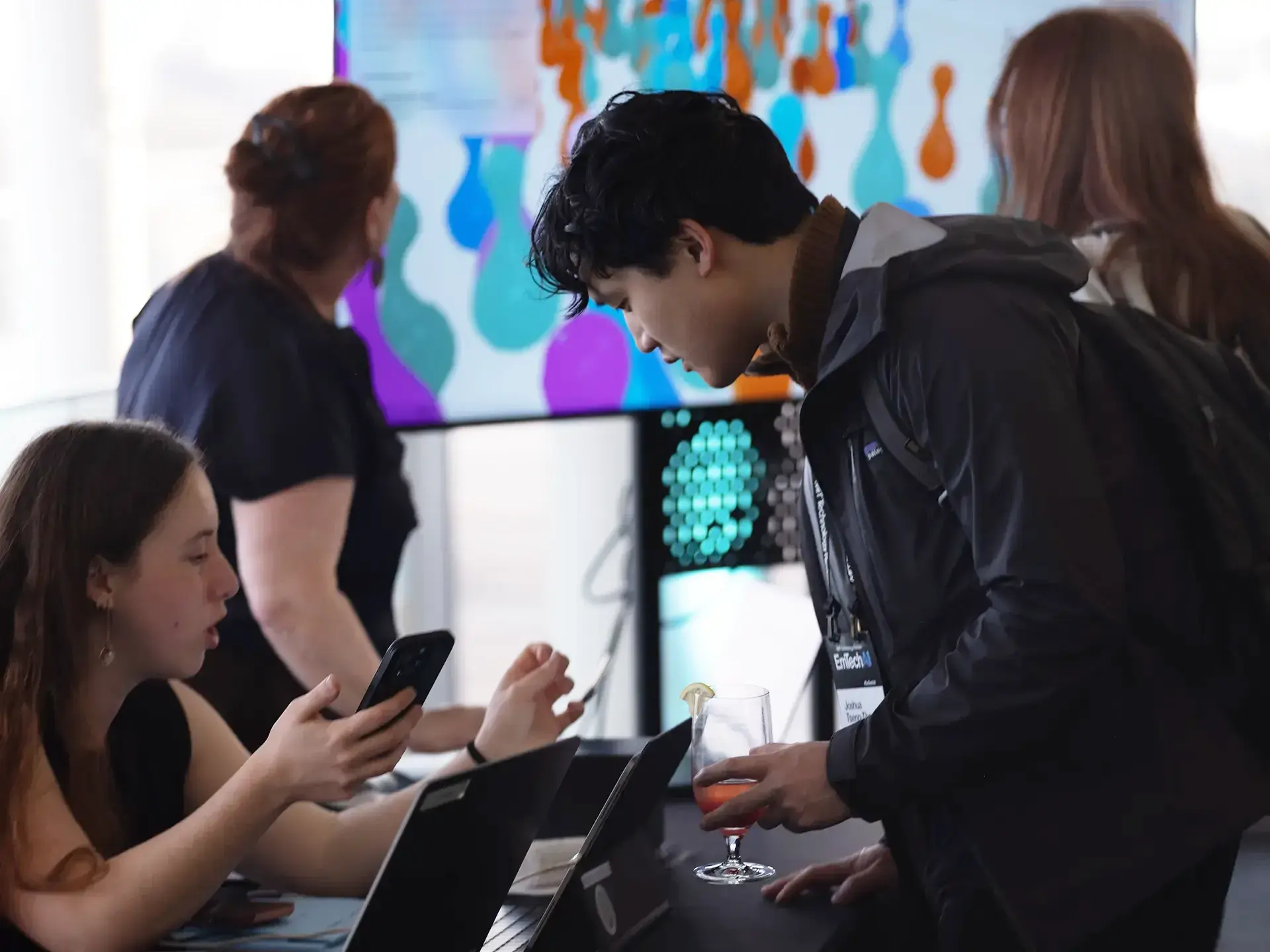
Without this human element, the experience might have felt confusing, unsettling, or intrusive. With it, the digital twins became a shared topic of conversation that encouraged attendees to connect with each other, and sometimes even sparked jokes.
For us, it was a tangible experience that inspired more design questions we’ll continue to explore: How can AI help scale human presence? Should AI be allowed to speak on behalf of humans when they’re not in the room? What types of memories should digital twins retain? And what other ways can we use AI to prompt connection?
The experiment showed us that people may be more receptive to AI representation than we expected, especially when the experience is playful, socially beneficial, and comes with clearly defined privacy protections.
It also showed that trust requires effort. Accuracy, consent, facilitation, and an off-switch are important details. These conditions make scaled presence feel generous rather than exploitative.
The future of agents is often described in terms of automation: tools that perform tasks on our behalf, streamline processes, and reduce friction. This experiment suggests another possibility. Agents may also evolve into a form of social infrastructure: systems that help people be discovered, remembered, represented, and reconnected. If that future is on the horizon, the work ahead is to decide what types of presence they should create, what forms of absence they should respect, and what kinds of human connection they should leave behind. All questions we’re excited to keep exploring.
Interested in exploring the future of agents with us? Get in touch.
Special thanks to the team that designed, coded, and built the digital twins prototype: Jenna Fizel, Jess Lura, Mina Seetharaman, Lindsey Turner, and Todd Vanderlin.
Heading 1
Heading 2
Heading 3
Heading 4
Heading 5
Heading 6
Lorem ipsum dolor sit amet, consectetur adipiscing elit, sed do eiusmod tempor incididunt ut labore et dolore magna aliqua. Ut enim ad minim veniam, quis nostrud exercitation ullamco laboris nisi ut aliquip ex ea commodo consequat. Duis aute irure dolor in reprehenderit in voluptate velit esse cillum dolore eu fugiat nulla pariatur.
Block quote
Ordered list
- Item 1
- Item 2
- Item 3
Unordered list
- Item A
- Item B
- Item C
Bold text
Emphasis
Superscript
Subscript