







.webp)

Earlier this month, Benito Antonio Martinez Ocasio (aka, Bad Bunny) gave the world a gift—a loud, vivid, unapologetic reminder of what art is meant to do.
To provoke. To inspire. To seize us by the imagination and refuse to let go. To send a message.
His art was inspiring because it came from someone who had something to say and had spent years learning how to say it. His craft was the vehicle. But his creative agency—the decisions he and his team made about what to make and why—is what inspired me.
Because an hour away from that stadium, back in San Francisco, you can’t escape billboard after billboard advertising AI companies promising to do all of it for you—the coordination, the coding, the creativity, the care.
Today’s students—studying film, animation, art, motion, sound, narrative, and design—are living inside that contradiction every day. And they’re asking a question that deserves a better answer than the one they’re getting.
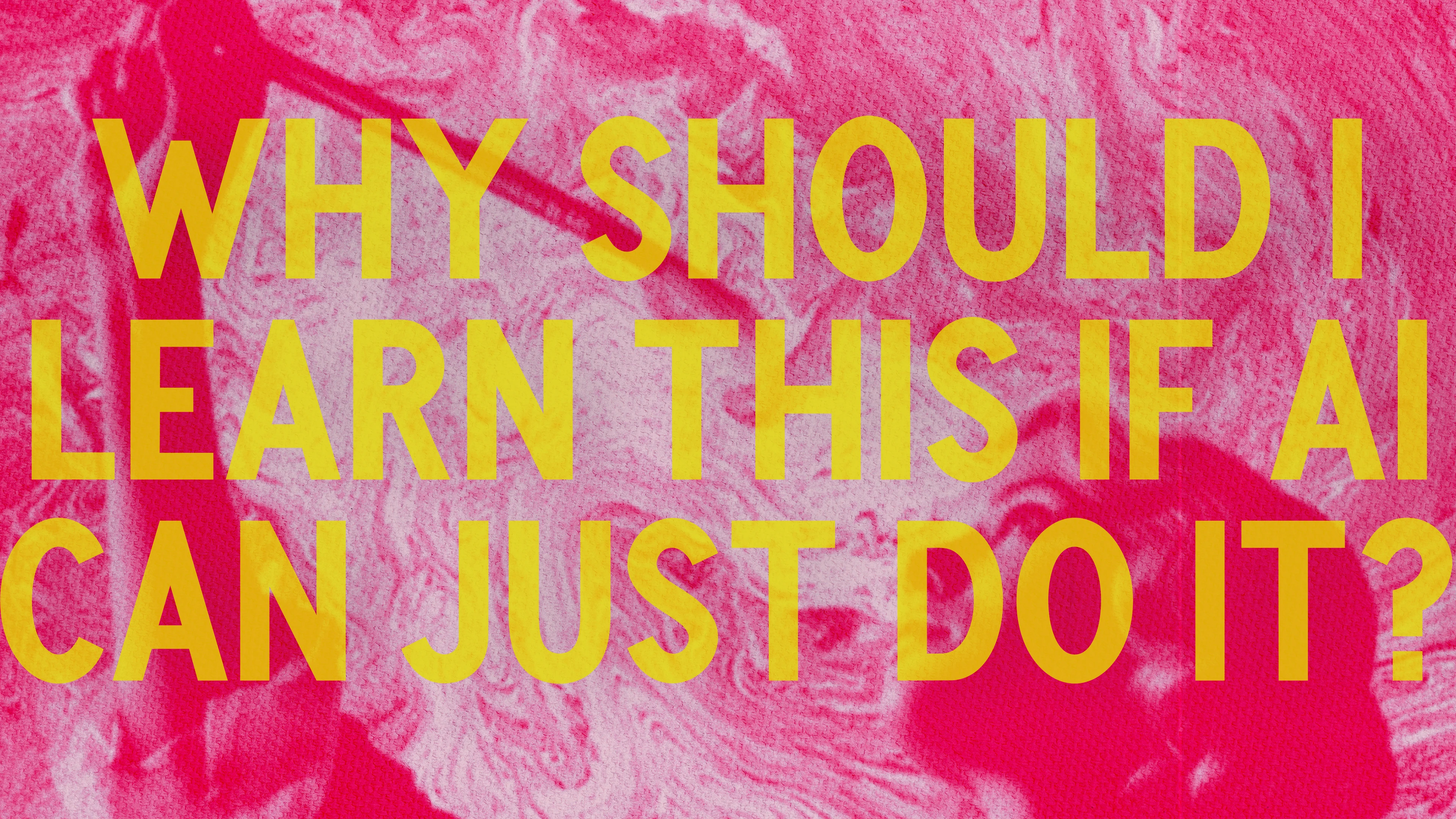
“Why should I learn this if AI can just do it?”
“This” being specific creative skills—writing essays, designing color palettes, coding websites. The concrete skills that, until very recently, were supposed to be their ticket to employment.
Under that question is a deeper one. “Will I still matter if machines can do this faster and cheaper than me?”
It’s a rational question when you’re watching older siblings struggle to find work and wondering if the path you chose will actually lead anywhere.
But the answers they’re hearing can end up sounding cliché and dated.
“You have to learn the rules before you break them.” “Art has always survived new technology.” “We said the same thing when the digital camera came out.”
Sure, art will survive, but that doesn’t mean that galleries or agencies are hiring. Photography’s survival didn’t help the people at Kodak. These answers aren’t much help when you can’t imagine where your first job is coming from.
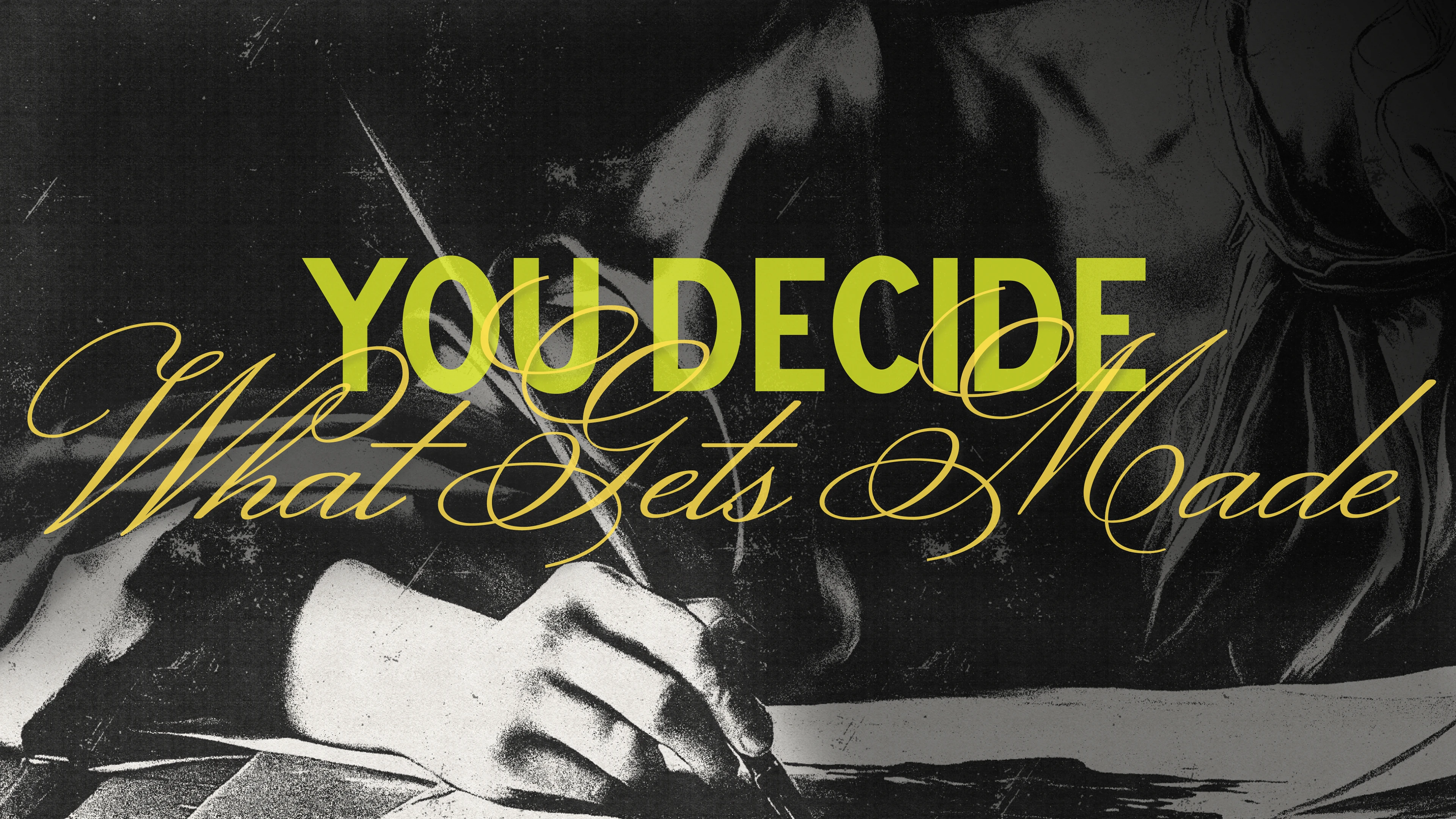
We owe them a better answer, one that doesn’t dodge the economics. How about this:
So you get to decide what gets made.
Every creative craft looks like it’s about a tool. But underneath, it’s about understanding how the world behaves and how craft can make people feel.
In animation class, when you animate a ball rolling across a screen, you’re learning the technical mechanics of keyframes and timing curves. But you’re also learning how humans perceive movement. You discover that a ball needs anticipation—a slight compression before the bounce. That momentum isn’t just physics; it’s emotion. A ball bouncing with too-perfect regularity feels robotic. One that settles with a wobble feels alive.
In music class, you’re learning scales and chords. But you’re also learning about tension—how a suspended fourth makes listeners lean forward, waiting. You’re learning to command silence, to understand that the space between notes can be more powerful than the notes themselves.
In film class, you’re learning shot composition and editing. But you’re also learning when to show and when to hide. The scariest moment in horror is rarely the monster, but the shadow moving behind the door.
.webp)
The techniques we learn are temporary. The understanding they create is permanent.
But how does this knowledge connect to jobs?
In my 20 years of working in the Bay Area, I’ve witnessed a generation of jobs that were billed as creative, but were really about efficiency. Jobs optimizing button colors for A/B tests. Jobs choosing between template #3 and template #7. Jobs where your creativity was measured in tickets closed per sprint. Because of AI, that game is sunsetting. And honestly? I think it’s about time.
I am so lucky that in my 10-year career at IDEO, I’ve seen where real creativity adds real value, the kind that contributes to bottom lines. It’s valuable to know the difference between impressive and meaningful. Between the thing that impresses a conference room and the thing that makes users come back. It’s valuable to look at a brief that says one thing and recognize that the real problem is something else entirely.
It’s valuable to know what to leave out. Any AI can generate more. The hard part is knowing what doesn’t belong, and what’s missing.
It’s valuable to take a vague, contradictory set of stakeholder opinions and turn them into a clear creative direction that everyone recognizes but nobody could articulate.
It’s valuable to translate ambiguity into direction. To hear “I don’t know, it just feels off” and turn that into concrete next steps.
Here’s my favorite:
It’s valuable to be brave enough to say the hard thing out loud, at the right moment. Like Bad Bunny did. He had something to say about immigration, about identity, about who gets to be seen in this country. True creative confidence is having the courage to name when something doesn’t make sense, even when everyone else is nodding along. That kind of confidence doesn’t come from prompts or tools or tutorials. It comes from years of making things, failing, revising, and paying attention.
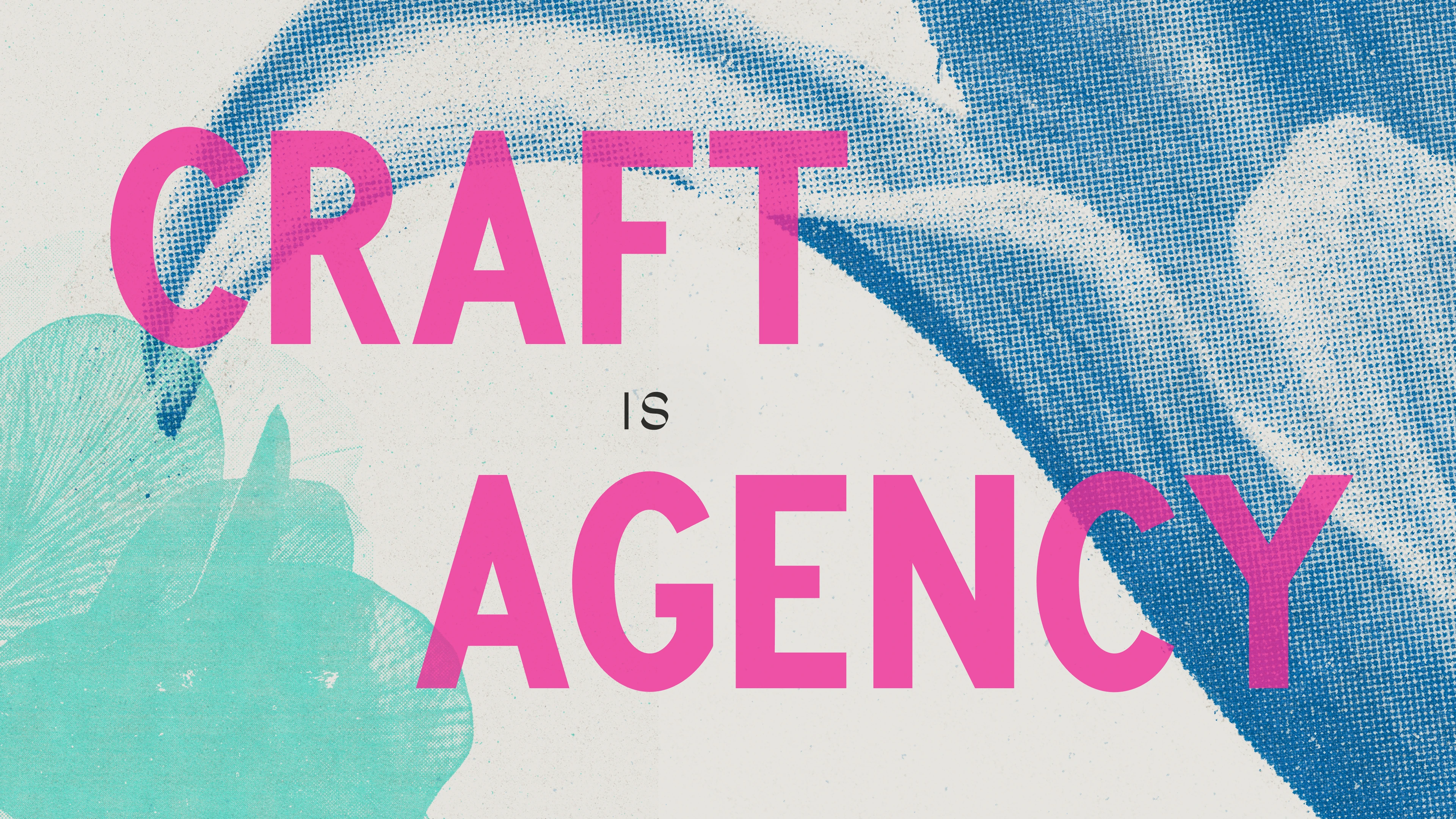
Craft is creative agency.
We learn it so we get to decide, not just execute. So we’re the ones evaluating AI’s output, not the other way around. So that we can shape taste, name meaning, and challenge systems.
Which is exactly what Bad Bunny did. And he had the craft to say it in a way that 70 million people couldn’t look away from.
That’s creative agency. And that’s why it will always matter. Because for students, for people early in their careers, and for all of us, it matters far more what we can do with the tools than what they can do for us.
This article is adapted from Rachel Young's February 2026 keynote for the Creative Educators Network.
Heading 1
Heading 2
Heading 3
Heading 4
Heading 5
Heading 6
Lorem ipsum dolor sit amet, consectetur adipiscing elit, sed do eiusmod tempor incididunt ut labore et dolore magna aliqua. Ut enim ad minim veniam, quis nostrud exercitation ullamco laboris nisi ut aliquip ex ea commodo consequat. Duis aute irure dolor in reprehenderit in voluptate velit esse cillum dolore eu fugiat nulla pariatur.
Block quote
Ordered list
- Item 1
- Item 2
- Item 3
Unordered list
- Item A
- Item B
- Item C
Bold text
Emphasis
Superscript
Subscript